
Could Your Commercial Property’s Debris Removal Limit Fall Short After a Major Loss?
September 3, 2026
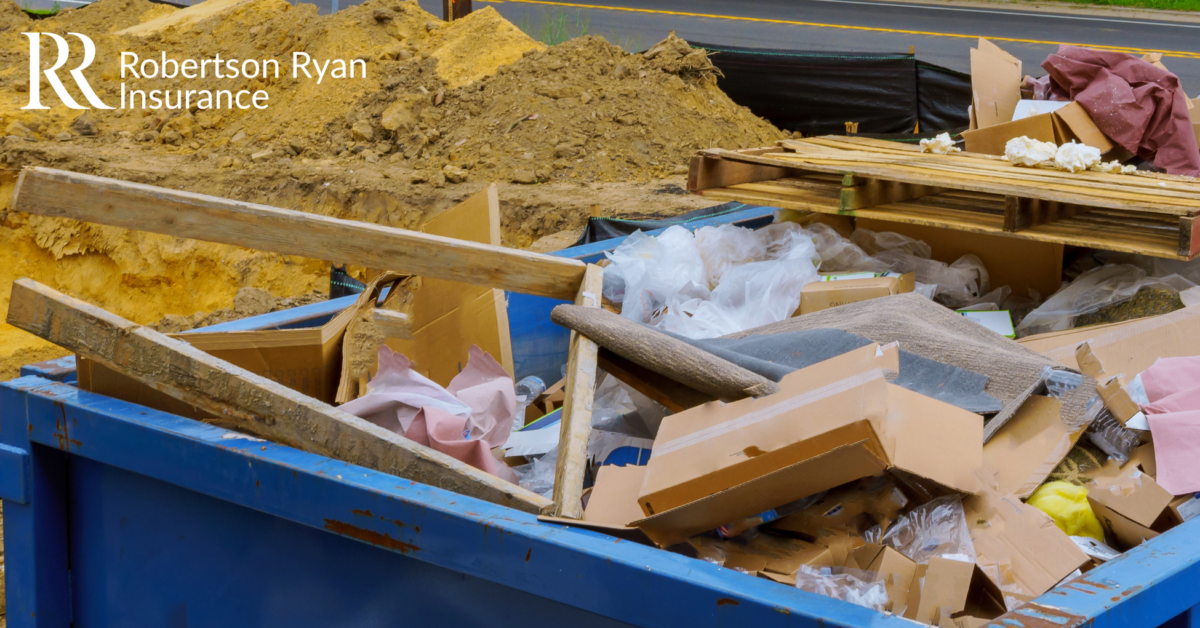
When commercial property owners think about insuring a building, the first number they typically focus on is the building limit: Do I have enough insurance to rebuild? Unfortunately, there is another cost that can become significant before reconstruction ever begins…removing what is left of the damaged building.
For owners of large commercial buildings, warehouses, manufacturing facilities, multifamily properties, and other complex structures, debris removal and demolition can represent a substantial expense following a major fire, tornado, windstorm, or other covered loss. The question is whether the debris removal provisions in your commercial property policy would be enough.
What Is Debris Removal Coverage in Commercial Property Insurance?
Debris removal coverage generally helps pay the cost of removing debris from covered property following a covered cause of loss. Depending on the loss and policy language, expenses can involve:
- Labor and equipment needed to clear damaged materials
- Loading and hauling debris
- Disposal and landfill charges
- Specialized equipment for large or difficult-to-access properties
- Segregation or handling of certain materials
- Portions of dismantling or demolition associated with damaged property, depending on policy wording and circumstances
The important distinction for property owners is understanding that debris removal coverage is not necessarily an unlimited amount sitting on top of the building limit.
Under commonly used commercial property policies, debris removal is an additional coverage. The calculation can limit covered debris removal expenses to 25% of the sum of the paid direct physical loss plus the deductible. And all of this is subject to the property limit.
Below are two examples of debris removal coverage limit calculations:
Large Commercial Loss: $500,000 limit, $400,000 loss, $2,500 deductible. Debris removal sublimit: ($400,000 + $2,500) × 0.25 = $100,625. Direct loss plus debris removal = $500,625, which exceeds the $500,000 limit — the additional $25,000 kicks in. Maximum available: $525,000. If actual debris removal costs $130,000, the total ($530,000) exceeds $525,000, and the insured is $5,000 short.
Partial Commercial Loss: $500,000 limit, $50,000 loss, $2,500 deductible. Debris removal sublimit: ($50,000 + $2,500) × 0.25 = $13,125. If actual debris removal costs $18,000, the insured is $4,875 short and the $25,000 additional provides no help because the policy limit was never exceeded. The 25% cap is the binding constraint on partial losses.
Why Can the Standard Debris Removal Provision Be a Problem for a Large Commercial Property?
The concern becomes easier to understand when you compare a policy provision with the physical reality of clearing a large loss.
Imagine a significant fire at a warehouse or manufacturing facility.
Before rebuilding can begin, the property owner may need contractors to secure the site, dismantle unstable portions of the structure, separate materials, operate heavy equipment, load trucks, haul debris, and pay disposal charges. If hazardous or regulated materials are involved, the process may become substantially more complicated.
All those costs occur before the new building goes up.
For a small property loss, a standard debris removal provision may provide meaningful protection. On a large commercial or industrial property, however, an additional amount can look very different relative to the potential scale of the cleanup. That’s why debris removal deserves its own discussion when reviewing insurance on larger properties.
Debris Removal and Demolition Are Not Always the Same Thing
Another important issue is the distinction between debris removal and demolition. Removing debris that has already fallen is one thing. Physically dismantling portions of a damaged structure can be another.
Coverage can depend heavily on the wording of the policy and the circumstances of the loss. Property owners should therefore avoid assuming every expense involved in tearing down and clearing a damaged building will automatically fall under the debris removal provision.
There is another coverage issue to consider as well: Ordinance or Law coverage.
Suppose a fire destroys 60% of an older building, but local authorities require the remaining 40% to be demolished because of current building codes. The cost associated with that undamaged portion may raise a different insurance question than removing debris from the portion damaged by the fire. A commercial property review should therefore consider debris removal and Ordinance or Law coverage together rather than treating them as interchangeable.
Why Today’s Demolition Environment Matters
Commercial demolition isn’t simply a matter of sending a bulldozer to the property. The cost and complexity of clearing a site can depend on factors including:
- Building size and construction
- Concrete, masonry, and structural steel
- Number of stories
- Site access
- Proximity to neighboring buildings
- Heavy-equipment requirements
- Labor costs
- Trucking distances
- Landfill and tipping fees
- Permits and local requirements
- Environmental regulations
- Asbestos, lead, or other regulated materials
- Required material separation or recycling
- Whether mechanical demolition, deconstruction, or a combination is necessary
An urban commercial building, for example, can present a very different demolition exposure than a single-story warehouse with open access outside a larger city. Likewise, a manufacturing property may have its own considerations based on construction, age, occupancy, site access, and the materials present. That is why simply relying on a default policy provision may not provide an accurate picture of the property’s actual exposure.
Older Buildings Can Present Additional Challenges
Age matters.
Many older commercial and industrial properties were constructed when materials and building practices were different from today’s standards. Following a major loss, testing may identify materials that require specialized handling, abatement, transportation, or disposal.
Importantly, standard debris removal coverage can contain exclusions and limitations involving pollutants and contaminated land or water. Hazardous material and pollution exposures should therefore be reviewed separately rather than assuming all environmental cleanup expenses will qualify as debris removal.
The takeaway is simple: the more complicated the property is, the more important it becomes to understand the actual cost of clearing the site after a major loss.
How Can Commercial Property Owners Determine Whether Their Limit Is Adequate?
There isn’t one debris removal limit that is appropriate for every commercial property. Instead, owners can start with a practical question:
What would it cost to clear a particular site after a severe or total loss?
That conversation should involve your trusted Robertson Ryan Insurance advisor along with contractors, property managers, engineers, or other specialists familiar with the specifics of your building.
Factors worth reviewing include:
- The size and construction of the building: A 25,000-square-foot retail building and a 500,000-square-foot industrial facility should not automatically be evaluated the same way.
- The age of the property: Older construction may create additional demolition, code, and material-handling considerations.
- Potential hazardous or regulated materials: Understanding what materials may be present before a loss can help identify potential insurance gaps.
- Site accessibility: Dense urban locations, neighboring structures, and restricted equipment access can make demolition and removal more complicated.
- Local disposal and contractor costs: Insurance values should reflect today’s environment rather than historical cleanup costs.
- The actual policy wording: Ask which commercial property form and edition applies, how debris removal is calculated, what additional amount is available, and whether endorsements have changed the standard provisions.
Can Debris Removal Limits Be Increased?
Depending on the insurance carrier and policy, additional debris removal coverage may be available. Carrier-specific forms and endorsements may provide other options.
For owners of larger properties, the objective shouldn’t necessarily be to select an arbitrary higher number. A better approach is to estimate the property’s realistic exposure and then determine whether available coverage aligns with it.
Don’t Forget Ordinance or Law Coverage
A debris removal review should often lead directly into a review of Ordinance or Law coverage. Following a major loss, current building codes or municipal requirements can create expenses beyond simply repairing the portion of the building that was damaged. Depending on the policy and endorsements, Ordinance or Law coverage may address exposures involving:
- Coverage A – Loss to the Undamaged Portion of the Building
Coverage can address the value of an undamaged portion that must be demolished because of enforcement of an ordinance or law. - Coverage B – Demolition Cost
Coverage can address the expense of demolishing and clearing the undamaged portion of the structure when required by ordinance or law. - Coverage C – Increased Cost of Construction
Coverage can address certain additional costs of rebuilding to current codes.
For an older, large commercial property, these limits can be every bit as important as the building limit itself.
Questions to Ask During Your Next Commercial Property Insurance Review
Commercial property owners don’t need to become experts in policy forms. But they should know which questions to ask. Consider discussing the following with your insurance advisor:
- What debris removal coverage does my policy provide?
- Is that amount inside my building limit, outside it, or a combination of both?
- What additional debris removal limit applies after the underlying provision is exhausted?
- Has that limit been specifically increased for my property?
- What would demolition and debris removal realistically cost for my building today?
- Are there hazardous material or pollution exclusions I need to understand?
- What Ordinance or Law limits apply to demolition of an undamaged portion of my building?
- Have my building values and related sublimits been reviewed recently?
Those questions can uncover a significant exposure before a loss occurs rather than after.
The Bottom Line: A Large Building Deserves a Large-Loss Review
A commercial property insurance program should do more than insure the cost of putting a building back together. It should also consider what it could cost to take the damaged building apart and clear the site first.
For large commercial, industrial, and multifamily properties, relying solely on standard debris removal provisions may leave a meaningful gap between what the policy provides and what cleanup could actually cost.
Robertson Ryan Insurance works with businesses and commercial property owners to evaluate property exposures, policy limits, and coverage options based on the characteristics of their operations and buildings.
If you own or manage a large commercial property, consider making debris removal and demolition limits part of your next commercial property insurance review. Because after a major property loss, rebuilding can’t begin until there’s a site to rebuild on.
*Coverage varies by insurer, policy form, endorsements, and the circumstances of each loss. This article is intended for general informational purposes and is not a statement of coverage. Please refer to the applicable policy terms, conditions, limitations, and exclusions.