
E-Bikes: Safety and Insurance Coverage Considerations
May 7, 2026
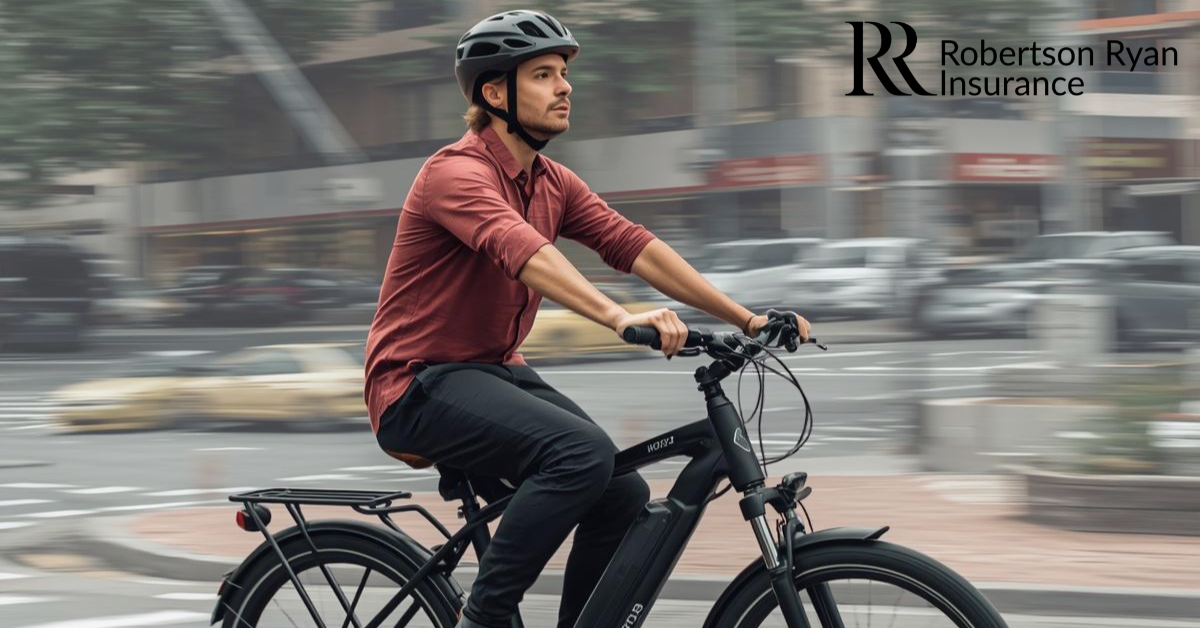
E-bikes are everywhere, and for good reasons. They make commuting easier, flatten hills, and offer a fun, efficient way to get around. But as their popularity has grown, so have concerns around safety and insurance coverage.
If you own or are thinking about buying an e-bike, it’s important to understand how these bikes differ from traditional bicycles, and how your insurance may (or may not) respond in the event of a loss.
Why E-Bikes Are Different
At a glance, e-bikes look like standard bicycles. However, many operate more like low-speed motorized vehicles.
- Some models can reach speeds up to 28 mph or more
- Many weigh 50+ pounds, significantly more than a traditional bike
- Certain bikes can be modified to go even faster
Higher speeds and increased weight mean:
- Greater stopping distances
- More severe injuries in a crash (research shows head injuries are the most common and often severe in e-bike crashes)
- Increased risk of liability if others are involved
In fact, studies have shown that injuries involving e-bikes tend to be more severe than those involving traditional bicycles, particularly when it comes to head trauma and internal injuries.
The Safety Gap
One of the biggest challenges with e-bikes is that regulation hasn’t fully caught up with the technology.
Rules can vary widely depending on your state or even your local municipality around:
- Where you can ride
- Helmet requirements
- Speed limits
- Throttle use
That means a bike that’s perfectly legal in one region may be restricted in another. These differences can also impact how insurance policies respond.
Does Your Insurance Cover Your E-Bike?
This is where things get complicated, and where many riders make incorrect assumptions.
Homeowners Insurance: Property Coverage
Your homeowners policy may provide some coverage for your e-bike as personal property. But not always…
Coverage depends on:
- How your policy defines a “motorized vehicle”
- The type and speed of your e-bike
- Whether there are any exclusions or sub-limits
Some policies:
- Cover lower-speed pedal-assist e-bikes
- Limit coverage amounts (for example, $1,500–$5,000)
- Exclude certain types entirely, especially higher-speed or throttle-based models
Liability Coverage: The Bigger Concern
The most important, and often overlooked, issue is liability.
If you’re involved in an accident and someone is injured, your homeowners policy may provide liability coverage. However:
- Most policies exclude motor vehicle-related liability
- Whether an e-bike qualifies as a “motor vehicle” depends on your policy’s wording
This creates a potential gray area.
In some cases, a higher-speed or modified e-bike may:
- Fall outside of standard bicycle treatment
- Be considered a motorized vehicle
- Result in limited or no liability coverage
Umbrella Policies
Umbrella policies typically follow the definitions and exclusions of your underlying homeowners policy. If coverage is excluded at the homeowners level, the umbrella policy may not respond either…leaving a significant gap in protection.
Specialty E-Bike Insurance
Because of these coverage uncertainties, specialty e-bike insurance has become more common.
These policies can offer:
- Coverage for theft and damage
- Liability protection
- Medical payments
For higher-value or higher-speed e-bikes, this can be a more reliable way to ensure proper protection.
What This Means for You
E-bikes offer a lot of benefits. While they also introduce new risks that aren’t always addressed by standard insurance policies.
Here are a few steps to consider:
- Understand your bike: Know its class, speed, and whether it has been modified
- Review your coverage: Don’t assume your homeowners policy fully covers your e-bike
- Focus on liability: This is where the most significant financial exposure exists
- Ask questions: Coverage can vary widely between carriers and policies
A Note on Safety
Safe riding habits are just as important as insurance coverage.
- Wear a helmet
- Be mindful of speed, especially in shared spaces
- Understand how your bike handles, particularly at higher speeds
- Stay aware of local rules and regulations
Safer riding doesn’t just protect you physically, it also helps reduce your risk of being involved in a liability claim.
Final Thoughts
E-bikes are changing how people commute and move about, but from an insurance standpoint, they fall into a gray area between bicycles and motorized vehicles. Because of that, it’s important to take a closer look at your coverage and make sure it aligns with how you use your bike. If you have questions about how your policy may respond, or whether additional coverage makes sense, we are here to help guide you through it.
*Please note that we rely on independent sources and recommend conducting further research or seeking guidance from a qualified industry professional, legal counsel, or licensed insurance agent as appropriate for your needs. These blog posts are intended for general informational purposes only.