
ACV vs. RCV Roof Coverage: Understanding the Difference Before a Claim Happens
November 3, 2026
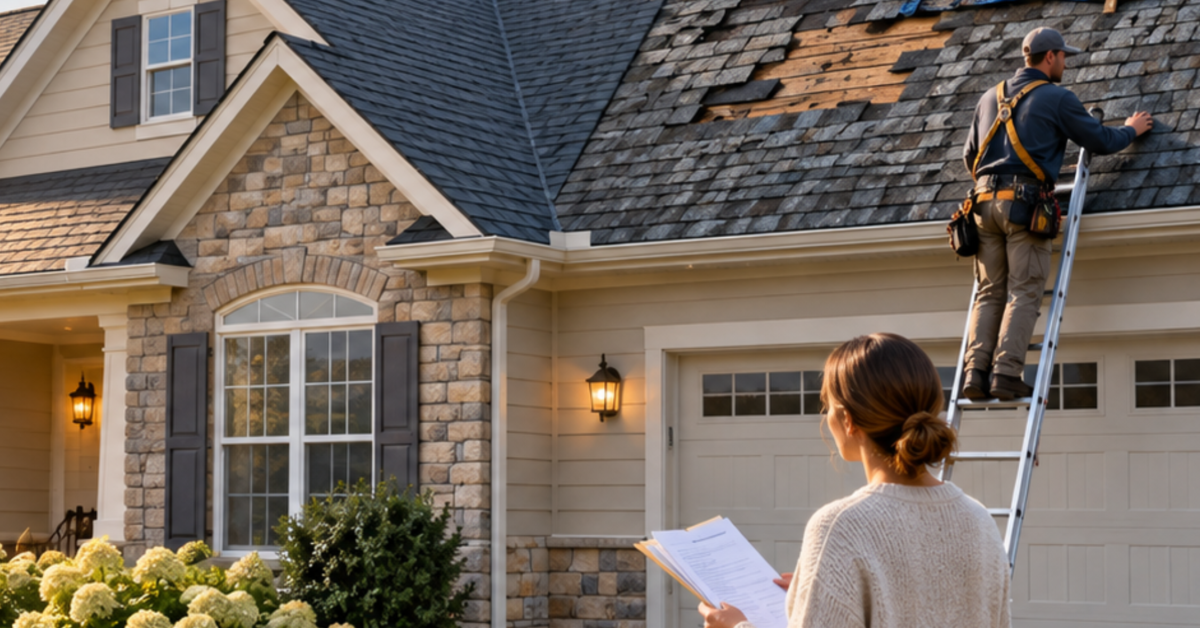
Replacement Cost vs. Actual Cash Value: What Homeowners Need to Know About Roof Coverage
The Basics: Replacement Cost vs. Actual Cash Value
- Replacement Cost Value (RCV): Pays based on the cost to repair or replace damaged property with materials of similar kind and quality, subject to policy terms, conditions, and deductibles.
- Actual Cash Value (ACV): Pays based on the property’s depreciated value at the time of loss.
- Key Difference: ACV settlements may be lower because depreciation is deducted.
- Why It Matters: Roof coverage can significantly affect your financial responsibility after a covered wind or hail loss.
- Important Note: Coverage depends on policy language, endorsements, deductibles, and claim circumstances.
What Is Actual Cash Value (ACV)?
Actual Cash Value coverage takes depreciation into account.
Instead of basing the claim settlement on the cost of a new roof, the insurance carrier evaluates the roof’s age, condition, and expected useful life to determine its current value at the time of the loss. Because roofs naturally depreciate as they age, an actual cash value settlement is often lower than a replacement cost settlement for the same covered loss.
Why Does the Difference Matter?
The difference between replacement cost and actual cash value may not seem significant until a claim occurs.
Consider this simplified example:
- Replacement cost of the roof: $20,000
- Age-related depreciation: $10,000
- Policy deductible: $2,500
Under a replacement cost settlement, the homeowner may receive substantially more toward replacing the roof than they would under an actual cash value settlement. Under an ACV approach, depreciation could significantly reduce the amount available for repairs or replacement, depending on the policy and claim circumstances.
Actual claim payments vary based on policy language, the condition of the roof, the cause of loss, and other factors. However, this example illustrates why it is important to understand how your roof is insured before a loss occurs.
Why Are More Homeowners Seeing ACV Roof Coverage?
In recent years, many insurance carriers have reevaluated how they insure roofs due to increased weather-related losses, higher construction costs, and rising claim expenses. As a result, some carriers have introduced endorsements that apply actual cash value settlements to certain roofs, particularly older roofs, while others offer homeowners a choice between different coverage options.
Because carrier approaches vary, two homeowners with similar houses may have very different roof coverage provisions. That is why reviewing policy details rather than assuming all homeowners policies work the same way is increasingly important.
Common Questions and Answers
At Robertson Ryan Insurance, homeowners frequently ask about roof depreciation after severe storms, particularly following hail and wind events. Many are surprised to learn that two policies with similar premiums can settle roof losses differently depending on whether replacement cost or actual cash value provisions apply. Understanding those differences before a claim occurs can help homeowners evaluate coverage options during renewal rather than after damage has already occurred.
Here are some other FAQs Regarding Roof Coverage:
Does homeowners insurance always replace a damaged roof?
Not necessarily. Coverage depends on the cause of loss, policy language, endorsements, deductibles, and whether the roof is insured on a replacement cost or actual cash value basis.
Does roof age affect insurance claim payments?
It may. Some policies or endorsements factor roof age and depreciation into claim settlements, which can reduce the amount paid following a covered loss.
Can roof coverage change when a roof gets older?
Some insurance carriers modify coverage options based on roof age or condition. Coverage approaches vary by insurer and policy.
How do I know if my roof is insured on an ACV or RCV basis?
Review your policy and endorsements and discuss your roof coverage with your Robertson Ryan Insurance advisor. Coverage details are not always apparent from the declarations page alone.
Questions to Ask During Your Next Policy Review
A policy review is a good opportunity to discuss:
- Is my roof insured on a replacement cost or actual cash value basis?
- Does my roof coverage change as the roof ages?
- Are there endorsements that affect roof-loss settlements?
- How would depreciation affect a future claim?
- What deductible would apply to wind or hail loss?
- What options are available if I want different roof coverage?
These conversations can help you better understand both the protection your policy may provide and the financial responsibilities you could face after a covered loss.
Should You Review Your Roof Coverage?
Many homeowners focus on premium costs when comparing insurance options but understanding how a policy responds at claim time is just as important.
The difference between replacement cost and actual cash value roof coverage can have a meaningful impact on what you may receive after a covered loss. Taking time to understand that difference today can help prevent surprises tomorrow.
If your roof is more than a few years old, your next renewal is a good opportunity to review how roof losses would be settled under your policy. Understanding whether your roof is covered on a replacement cost or actual cash value basis can help you evaluate your options, align coverage with your needs, and make more informed decisions before a claim occurs.
*Please note that we rely on independent sources and recommend conducting further research or seeking guidance from a qualified industry professional, legal counsel, or licensed insurance agent as appropriate for your needs. These blog posts are intended for general informational purposes only.